
What a La Puente Resident Lookup Covers
No single Los Angeles County index confirms a whole person. The right first search depends on the clue in hand. An address starts with the Assessor. A case question starts with Los Angeles Superior Court. A birth, death, or marriage question starts with RR/CC or California Vital Records. A past household starts with the library's directory and census collections.
| Record | What It Confirms | Where | Access |
|---|---|---|---|
| Assessor parcel | AIN, situs, building facts, values, latest recording clue | LA County Assessor | Free address/AIN search; owner at office or Property Data Sales |
| Recorded instrument | Grantor, grantee, document type, year, document number | RR/CC Norwalk index | In-person index; paid complete copies |
| Voter record | Personal registration or restricted file presence | County voter tools | Self-check or qualified file request |
| Court docket | Party role, case type, dates, register events | Los Angeles Superior Court | Case-specific web and courthouse access |
| Vital copy or index | Event date, place, names, relationships | RR/CC or CDPH | Authorized versus informational rules |
| Business or license file | Entity, agent, license, status, affiliation | California SOS or DCA | Free public indexes; board rules vary |
| Directory or census | Dated address, spouse, occupation, household | Library, NARA, genealogy databases | Collection and year dependent |
Every result needs a role. A grantee is not automatically an occupant. A court party is not automatically a wrongdoer. A business agent is not automatically the owner or resident. A directory listing is a snapshot, and a voter status result is designed for the voter who checks it.
Build a Two-Record La Puente Match
Start with the full name as it appears in the clue. Try hyphens, spaces, accents, compound surnames, middle initials, and likely abbreviations. Then add a second anchor: a street, parcel, spouse, business, filing year, or age where the source lawfully reveals it. La Puente's postal geography matters because ZIP Codes 91744 and 91746 extend beyond the incorporated city.
A name match grows stronger when two records agree on a date and a related fact. For example, an Assessor parcel can supply a latest recording reference, the RR/CC index can supply a grantee, and a directory or census can supply a dated occupant. A court docket can confirm a party role and filing year, while a vital index can confirm a family event. Do not flatten these into one claim.
- Write the name in every form found, including initials and diacritics.
- Choose the record that matches the question: parcel, case, vital event, civic status, or historical household.
- Compare one independent source with a different keeper and a different date.
- Mark contradictions instead of choosing the result that looks most convenient.
- Ask the custodian for a correction when the official record itself is wrong.
This method is slower than a single name hit, but it keeps a common-name result from becoming a false La Puente resident lookup.
Search La Puente Court Parties
Los Angeles Superior Court keeps La Puente trial cases. The Case Access gateway separates civil, criminal, family, probate, small claims, and traffic systems. Case-number mode requires the number. Name mode uses a party last name, with first-name, filing-date, or year refinements varying by case system. There is no single California statewide trial-court party index.
| Party name | Last name is the main name-mode field; first name and variants can narrow the result. |
|---|---|
| Case number | Required in case-number mode; format depends on case type and filing location. |
| Filing date or year | Available in some subsystems to reduce same-name results. |
| Case type | Separate Civil, Criminal, Family Law, Probate, Small Claims, and Traffic paths. |
| Result fields | Case title, parties and roles, case number, filing court, events, dates, and disposition where shown. |
Remote display is limited for criminal, family, civil-harassment, juvenile, adoption, sealed, and other sensitive records. Courthouse terminals can offer a broader public view, while protected material remains closed. Court copies commonly use a page fee, certification fee, or a search fee when clerk time exceeds the stated threshold. Confirm the current schedule.
California's official electronic court record guidance explains the remote and courthouse difference.
A typical visible docket inventory may include the following fields:
| Identity | Case title, party names and roles, attorneys where entered. |
|---|---|
| Placement | Case number, filing courthouse or district, and case type. |
| Dates | Filing date, hearings, register-of-actions events, and disposition where recorded. |
| Documents | Remote image availability varies; courthouse access can be broader. |
| Hidden material | Sealed, juvenile, adoption, protected identifiers, and other confidential items stay unavailable. |
- Docket
- The court's dated log of case events, not the complete file.
- Index versus image
- An index helps locate a record; an image is the filed document and may require separate access or a fee.
- Certified copy
- A copy issued and authenticated by the custodian, with certification rules and fees.
Federal matters use the PACER system and the Central District of California, which covers Los Angeles County. Those dockets have separate account, fee, and sealing rules.
Appeals use the separate California appellate case search, not the Los Angeles trial-court case-access screen.
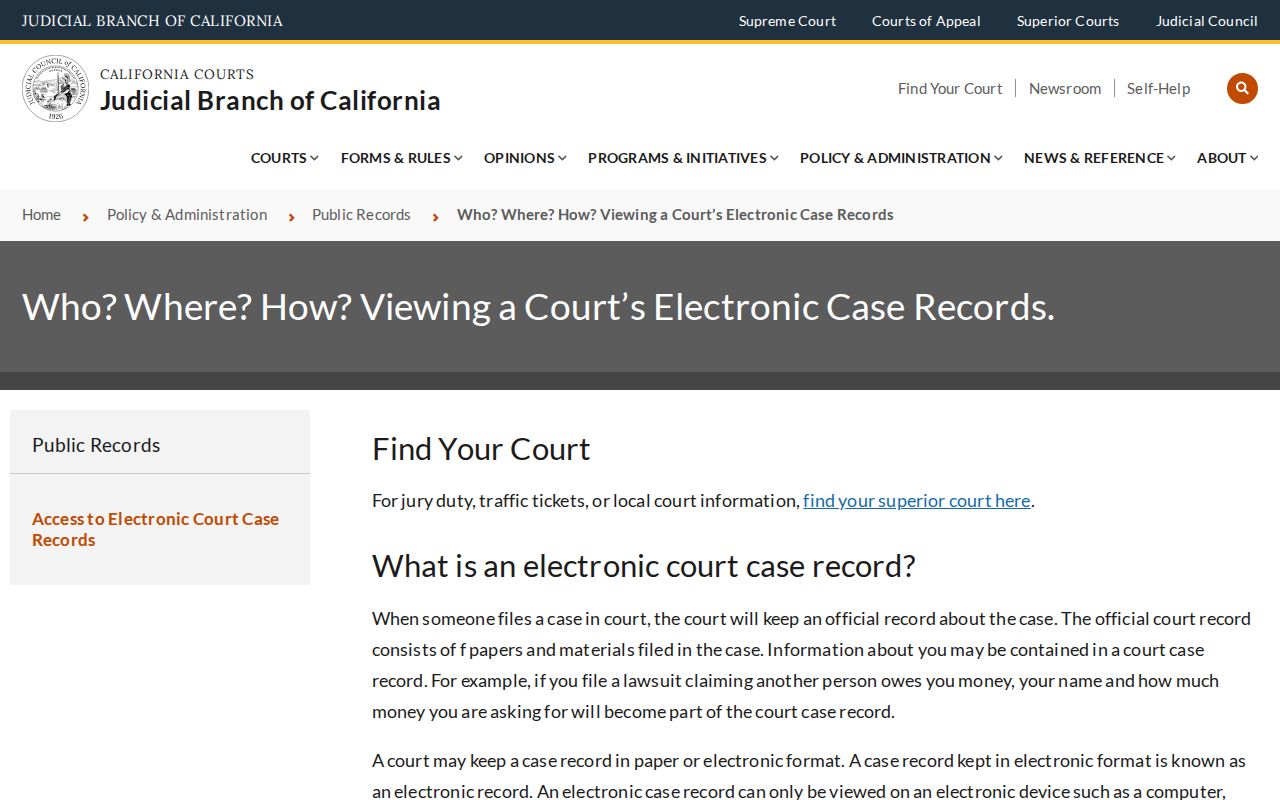
The court-access image is a reminder that a visible index event may be only one part of the complete case file.
Order La Puente Vital Copies
Los Angeles County RR/CC is the practical first custodian for births, deaths, and marriages that occurred in the county. California Department of Public Health is the statewide route. An authorized certified copy can establish identity but requires statutory eligibility and a sworn statement. An informational copy is available more broadly for many records and carries a legend that it cannot establish identity.
County fee evidence lists $34 for birth, $26 for death, and $19 for public or confidential marriage copies. Confidential marriage certificates generally need a court order under Family Code section 511 unless an authorized statutory route applies. Divorce case files are held by Superior Court. A certified copy is an official copy issued by the custodian, not a screenshot or index line.
Applications commonly ask for the record type, number of copies, full certificate name, event date and place, parent or spouse details, requester contact information, relationship or authorized category, purpose, signature, sworn statement, notary acknowledgment for mailed authorized requests, and payment. County online orders use a contracted vendor and may add processing or shipping charges. Mail and in-person options remain important when an online route fails.
California does not have one blanket public-opening rule for all modern births and deaths. The copy class and eligibility control access, while historical indexes and library collections have their own year coverage.
Use the California court copy guidance for court files, not a vital-record application.
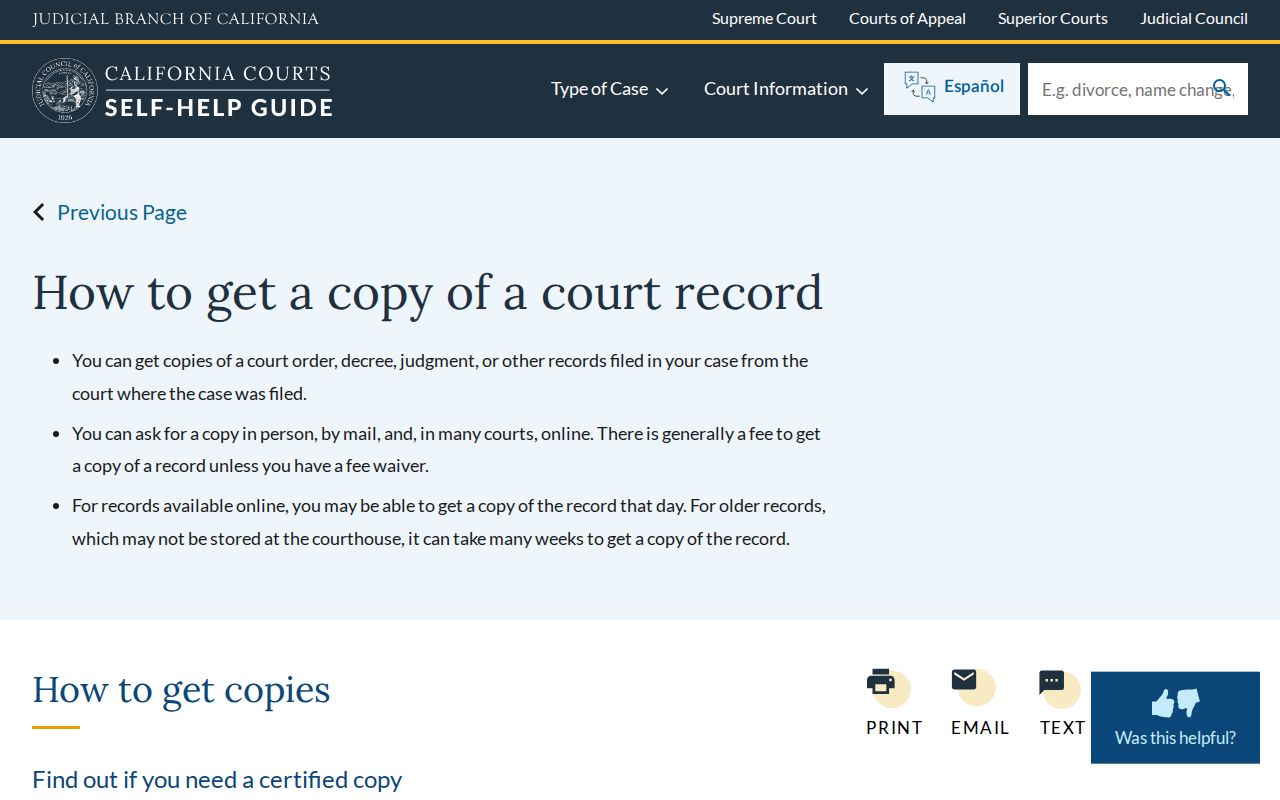
A copy request must name the right custodian and the right record class before a fee or eligibility rule can be applied.
Check La Puente Business Records
Some person searches begin with a business or professional clue. California Secretary of State bizfile can search a business name or entity number and show entity type, status, formation jurisdiction, principal and mailing addresses, agent for service, due date, and filing history. County fictitious business name records and a La Puente business license add local context.
The Department of Consumer Affairs license search can filter by board or bureau, license type or number, first or last name, city, county, status, discipline, and public documents where the board publishes them. Board coverage differs. A license address, agent address, or business address is an affiliation clue, not proof of a home.
Cross-check the same person or entity at three levels: city license or permit, county FBN, and state entity or license file. Correct an error with the agency that created the record. The State Controller's unclaimed-property portal can provide another dated name and reported-address clue, but it does not prove present residence.
The California Secretary of State business search is the state-level filing source for entity name, status, address, agent, and document history.
The Secretary of State capture shows the kind of filing detail that can corroborate a name while keeping business affiliation separate from residence.
The California Department of Consumer Affairs license search is the separate board and license source.
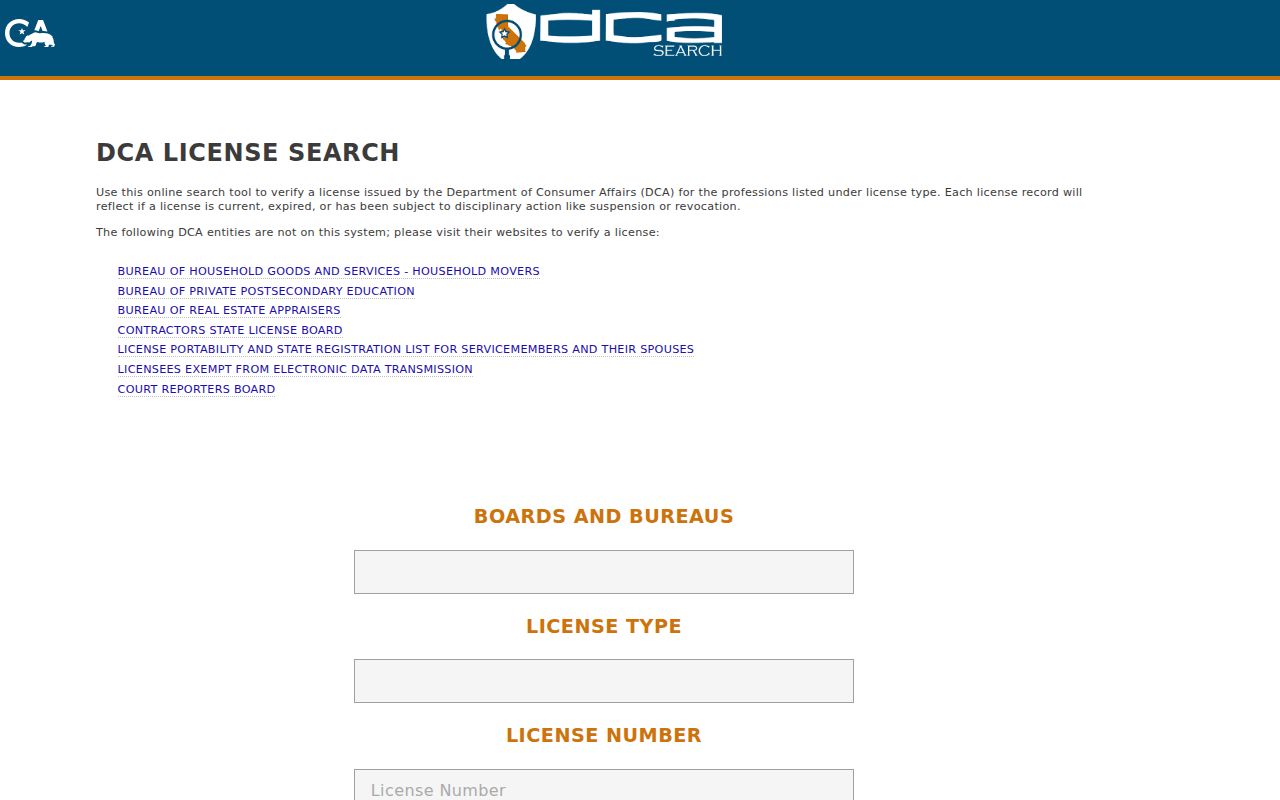
License results are board-dependent, so the responsible board remains the final source for status or discipline details.
Find a La Puente Name in Unclaimed Property
California's State Controller offers a free unclaimed-property search. Its form asks for last name or business name, with first name and city as optional refinements, then returns matching reported properties. A result can show an owner name, reported city or ZIP, reporting organization, and property category.
Use “La Puente” as a city clue, but remember that reported addresses may use nearby postal names and that the property could be old. A claim requires identity documents. An unclaimed-property hit is useful for reconnecting an heir with a state-held asset or testing a name variant. It is not evidence that the person currently lives at the reported address.
The California portal is free. Ignore mailers or paid promises that imitate a bill and compare any claim route with the State Controller's official instructions.
The older State Controller unclaimed-property interface is another official route; use the current state instructions and do not treat a reported address as present residence.
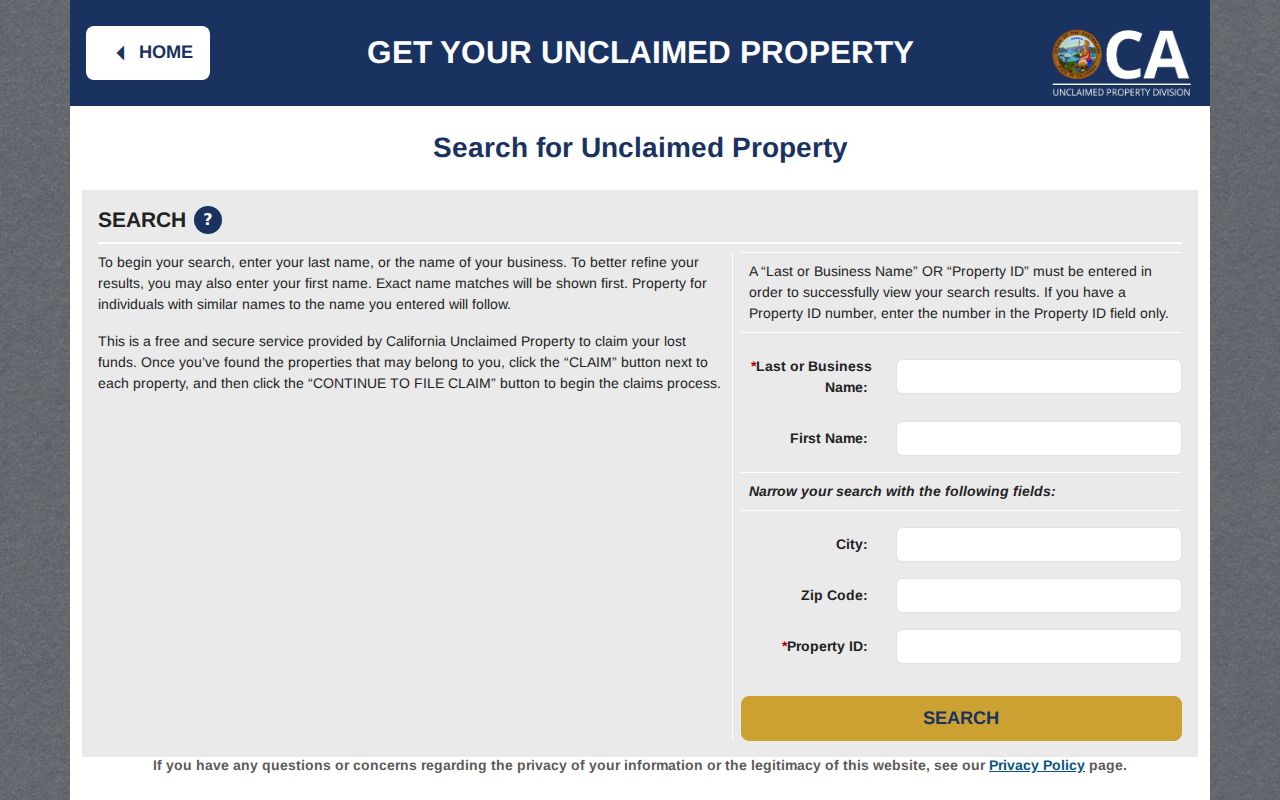
The unclaimed-property screen is best read as a historical lead with a claim process, not as a current directory entry.
La Puente Resident Lookup for Heirs
An heir search should begin with the decedent's probate case, petition, personal representative, obituary, and any recorded affidavit or deed. Probate filings may name heirs or addresses, but a filed address can be old, sealed, or redacted. A record role matters more than a matching surname.
For a former classmate, ask LA County Library reference staff for a school or yearbook catalog and then compare a dated directory or census clue. No official online La Puente yearbook run was located. A consensual alumni channel is safer than trying to infer a private address from unrelated records.
Birth-parent or adoption research must use California's confidential official processes through the responsible state or court program. Adoption files are not opened by stitching together public clues. The same principle applies to protected Safe at Home participants and substitute addresses.
These human-use cases explain why a resident lookup needs patience. The purpose is to reconnect, document family history, or resolve an estate question, not to turn a partial public record into a personal dossier.
Request or Correct a La Puente Record
California's Public Records Act, Government Code sections 7920.000 through 7931.000, lets any person request identifiable records from covered agencies without a California-residency requirement. Agencies generally make a determination within ten days and may add up to fourteen days for unusual circumstances. Inspection is usually free, while direct duplication costs can apply. The request must seek an existing record, not an answer or a new analysis.
Los Angeles County's CPRA form routes arrest or 911 material to LASD, building and zoning material to Public Works or Regional Planning, health inspection material to Public Health, court and divorce files to Superior Court, and property-tax material to the Treasurer and Tax Collector. Deeds, vital records, voter data, and criminal-history systems keep their special procedures.
Corrections also follow the source. Ask the Assessor about parcel ownership data, RR/CC about a recorder index or image, elections about voter information, the court about a docket, and the Secretary of State or board about a business or license filing. Keep the original result and the correction response together.
Legal Limits on a La Puente Resident Lookup
California privacy rules create real gaps. Safe at Home can substitute a mailing address. DMV data is restricted by the federal Driver's Privacy Protection Act. Voter files have purpose limits, and signatures, Social Security numbers, and license identifiers are confidential. Sealed court, juvenile, adoption, and protected vital records remain unavailable through ordinary searching.
Commercial data compilations can merge namesakes, repeat stale addresses, omit protected people, and hide the source of a claim. Treat that category as an unverified lead. Official portals, library catalogs, courthouse terminals, and custodian responses are the proper confirmation path.
Lawful use. A La Puente resident lookup is for personal, lawful research, family history, civic understanding, and consent-based reconnection. Do not use a name or address trail to stalk, harass, intimidate, or harm anyone.