
Sources for La Puente Previous Residents
A past-resident trail works from the most stable clue to the least certain. Recorded instruments establish named land parties. Assessor data links the parcel to a current recording reference. Directories and census schedules place people at an address on a date. Permits date changes to a structure. Obituaries and probate can explain a departure or connect a family.
| Source | Years It Covers | Where Held | What It Shows |
|---|---|---|---|
| Recorded instruments | 1851-present review; county says maintained since 1850 | RR/CC Norwalk | Grantor, grantee, legal description, recording trail |
| Assessor roll and GIS | Current portal effective date | Web, map, office owner channel | AIN, situs, building facts, latest document reference |
| Dedicated La Puente directory | 1966 | Californiana catalog and reference shelf | Listed names, addresses, and directory marks |
| Regional GTE books | 1988-1993 listed editions | Norwalk Californiana | Street-order subscriber clues |
| Federal census | Public through 1950 | NARA and library databases | Household members on enumeration day |
| Sanborn maps | No La Puente sheet or year verified | Library of Congress catalog | Structure footprint or use if covered |
| Permits and requests | Monthly lists; start date not verified | City portal or NextRequest | Alteration, inspection, applicant, work date |
The table also shows the gaps. No verified local house-history guide, exhaustive directory run, or La Puente Sanborn year set was found. A transparent gap is better than an invented date.
Begin the La Puente Previous Residents Trail
Search the Los Angeles County Assessor Portal by address or AIN. Record the parcel creation date, situs, structure facts, latest recording date, and document number. The public parcel card does not display the owner or owner mailing address. Obtain those fields through an Assessor district office or Property Data Sales.
Check the city's street booklet first. Postal La Puente reaches county territory, and a number range can switch responsibility by side of the road. The AIN keeps the parcel stable when a street label changes. A legal description or subdivision lot and block can help when an old deed does not use the modern situs address.
AIN means Assessor Identification Number: four-digit map book, three-digit page, three-digit parcel. It is an assessment and map key, not the recorder's party key. The current parcel supplies the starting point for a previous residents search.
- AIN
- The county Assessor's parcel identifier, often written in a 4-3-3 format.
- Legal description
- The recorded land wording that identifies lot, block, tract, or other boundaries.
- Chain of title
- The sequence of recorded transfers and interests linked through earlier parties.
La Puente Previous Residents in Deeds
Los Angeles County's recorder index is not searchable by address or APN. Search the current assessed owner as grantee in the likely acquisition year. On the purchase instrument, identify the grantor or seller. Search that name as grantee in earlier years. Repeat the process and follow the legal description, lot, block, and document number when the street name changes.
Records since 1851 are reviewed by appointment at 12400 Imperial Highway, Norwalk. The 1851-1957 index is on the lower level, and 1958-present is on the second floor. Viewing is free. Telephone index searches are refused. A copy request can go online, by mail, fax, or in person. Give the document number, or provide the indexed name, year, and title. The county describes $0.50 per name per year for a real-property search, then $6 for the first page and $3 for each additional page.
- Write down the current AIN, assessed owner name, latest document number, and likely acquisition year.
- Search that owner as grantee in the RR/CC year index.
- Read or order the purchase instrument and record its grantor, legal description, and document number.
- Search the earlier grantor as grantee in the prior year range.
- Repeat until the target date, then compare the chain with directory and census occupancy clues.
Online orders may take up to 20 working days. Mail goes to RR/CC Real Estate Records Section, P.O. Box 1130, Norwalk, CA 90651-1130. The RR/CC recorder FAQ states the grantor, grantee, and year mechanics.
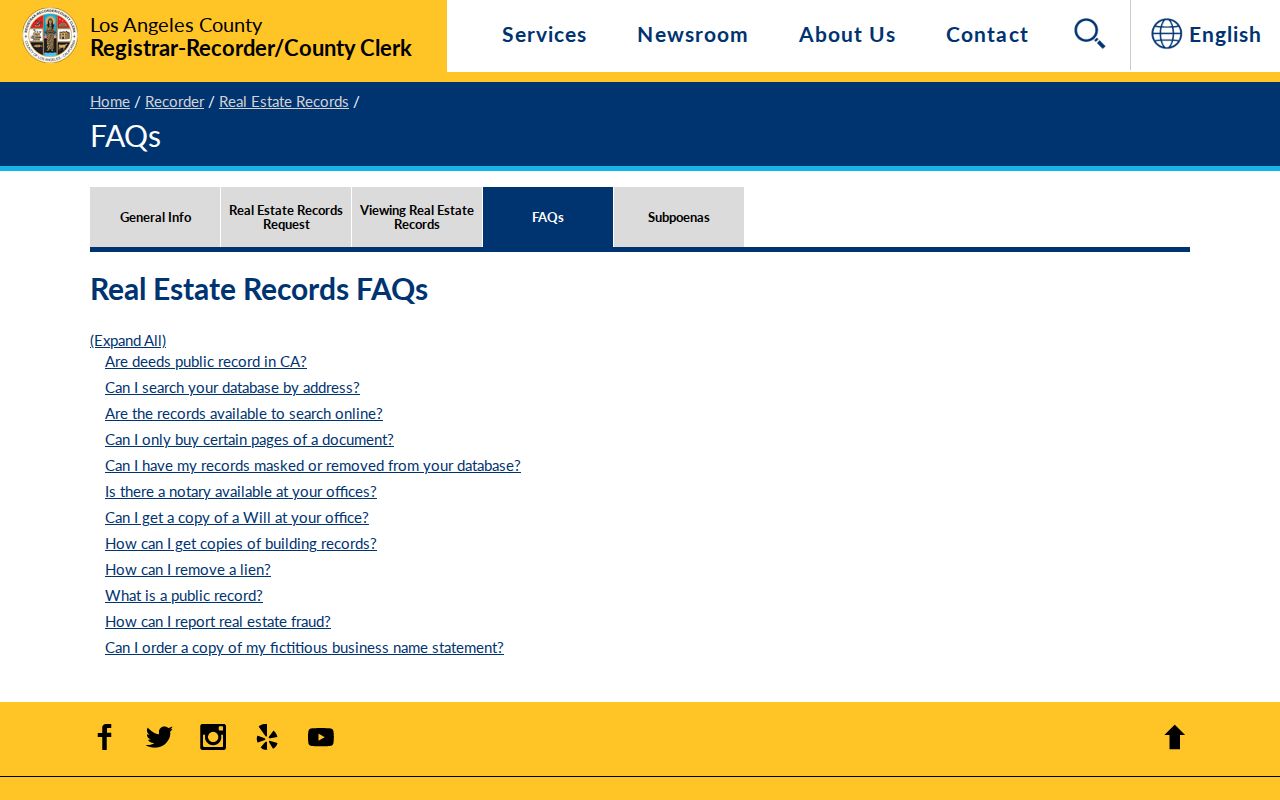
The recorder image shows why previous residents research starts with an owner name and year rather than a street box on the county website.
La Puente Deed Records at Norwalk
The 1958 floor break is more than a visit detail. A deed chain that crosses it requires a researcher to move from the lower-level 1851-1957 material to the second-floor 1958-present material. Keep the year, party role, document type, and book or page reference beside each step.
Recorded instruments can show execution or acknowledgment dates, recording date, document number, book and page for legacy material, legal description, signatures, return address, and transfer or consideration clues. The index entry and the document image are different things. The office does not sell selected pages from a document; complete copies must be purchased.
Military-discharge records have special rules. Confidential marriage certificates and wills follow different custodians. Wills and probate petitions belong with Superior Court. Those exceptions can explain why one family clue leaves the real-estate chain.
The county's restrictive-covenant review describes a countywide review of documents recorded since 1850 and a free modification route. It is useful preservation context for an old subdivision chain, not a substitute for the deed index.
Use the La Puente 1966 Directory
The dedicated 1966 La Puente city directory is the cleanest confirmed occupancy point between the early post-incorporation years and the later regional phone books. The catalog does not expose a page image, exact publisher, or verified reverse-section run. Ask Californiana staff for the title page and abbreviation key before making a detailed claim.
Regional GTE books fill part of the later gap: September 1988, September 1989, March 1990, September 1992, and March 1993. A criss-cross or reverse section can show a listed subscriber by street and number. It may not include every occupant, and the subscriber can be a business or a different household member.
The La Puente city directory collections page treats the library shelf, regional runs, and entry-reading method in full. Here, the directory is used only as a dated occupancy layer within one address history.
La Puente Records: Deeds and Census
A deed says who transferred an interest. The federal census says who was counted in a household on enumeration day. Pairing both helps separate title from occupation. NARA's public census schedule currently reaches 1950 under the 72-year rule. LA County Library's local-history material highlights California census schedules from 1850 through 1910, along with newspapers and histories.
Start with the directory address, then search the census name index. If the name is missing, test surname variants, initials, nearby enumeration districts, and the street or household relationship. A census line can show age, relationship, birthplace, and occupation, but it is still a dated snapshot.
- Use the directory address and year to identify the likely census place or enumeration district.
- Search the household name with surname, initials, and family relationships.
- Compare the census address and members with the directory entry, not just the head name.
- Use a later directory, obituary, probate file, or deed to test what happened between the two dates.
The National Archives census guidance explains release timing and research routes.
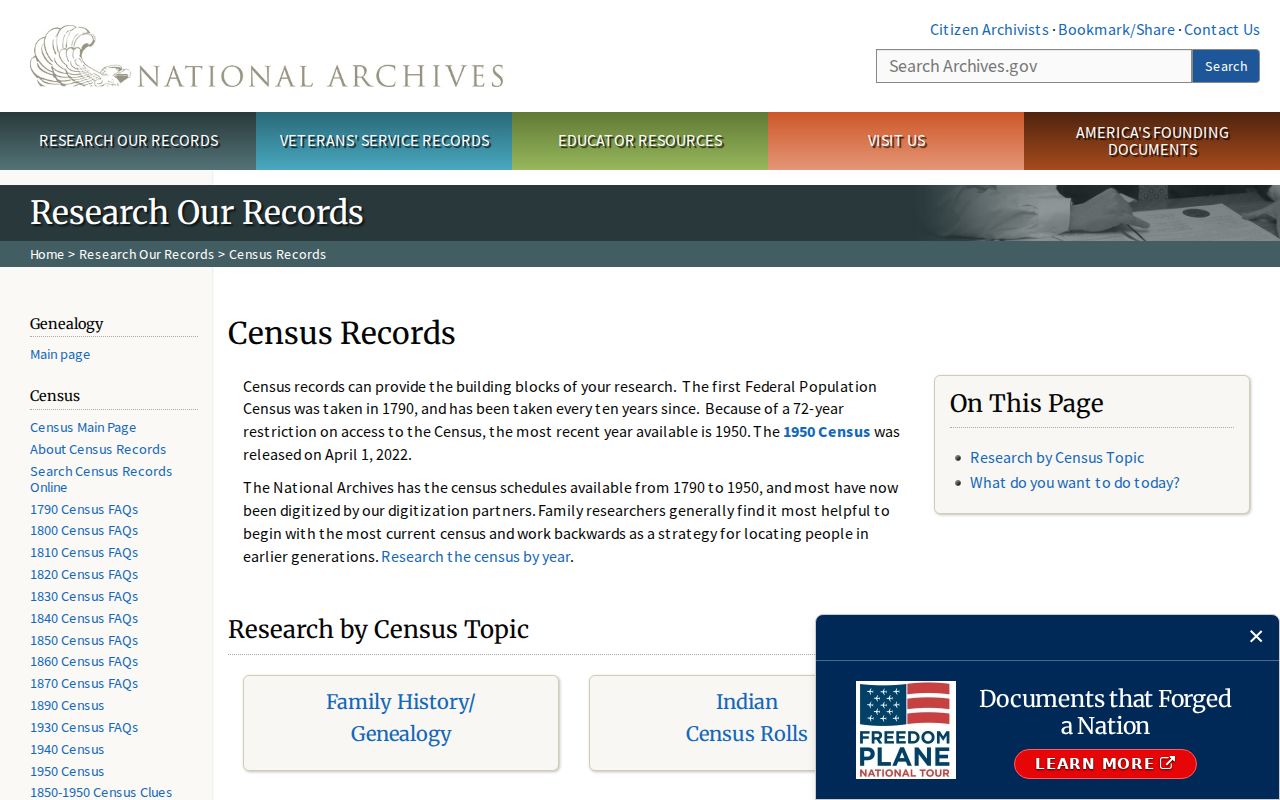
The census capture represents the household layer that a grantor-grantee chain cannot provide.
La Puente Previous Residents and Permits
La Puente Building and Safety publishes monthly permit activity and provides an inspection-request route. A narrow NextRequest can ask for a permit card, inspection history, final notice, responsible party, and date range tied to the address. Permit records can date an addition, demolition, or alteration even when a directory is missing.
Check the city boundary first. If the street booklet places the parcel in county territory, the custodian may be Public Works or Regional Planning. Plans can carry copyright or security limits, and code files can contain complaint-source information that is withheld. Request final orders or milestones when those are enough.
A permit applicant, architect, contractor, or responsible party is not automatically a prior occupant. Use the date as a structural clue, then compare the address with a directory, census, newspaper, deed, or probate record.
La Puente Previous Residents and Address Gaps
The research did not verify a single La Puente street-renumbering year or a citywide E911 realignment. When a historical address seems absent, check the street booklet's number range, odd or even side, orientation, ZIP, parcel creation date, subdivision lot, and legal description. A postal city label may be broader than the incorporated city.
Sanborn maps can show a building footprint or use when the specific La Puente sheet exists, but no local sheet and year set was verified. The Library of Congress Sanborn collection is a catalog path, not proof that a La Puente map is present.
Old names may sit under Rancho La Puente, Puente, or Los Angeles County. The town was laid out in 1886 and the city incorporated in 1956. Searching only the modern city label can hide earlier records without showing that the house changed.
Lawful La Puente Previous Residents Research
Previous residents research is strongest when it stays tied to a house history, family history, estate question, or documented property chain. It should not turn a listed name into a current-person conclusion. Directory and census entries are snapshots. Deeds name title parties. Permits name participants in a project. None alone lists every person who used an address.
Protected and substitute addresses, sealed probate or court material, unlisted phone numbers, missing directory years, trusts, entities, and common names create normal gaps. A gap calls for a different custodian or a better date, not a guess. Ask the library, archive, clerk, or records office for the next valid channel.
Lawful house history. Use a La Puente previous residents search for personal research and family history. Never use a past address or name trail to stalk, harass, intimidate, or harm anyone.